Enrollment for this class opens Sunday December 28th at 9 am. All spots are filled in order of receipt. Please email peter@petergalbert.com to enroll. Tuition is $1600, deposit due upon enrollment is $800. Please visit the website for shop details and policies.
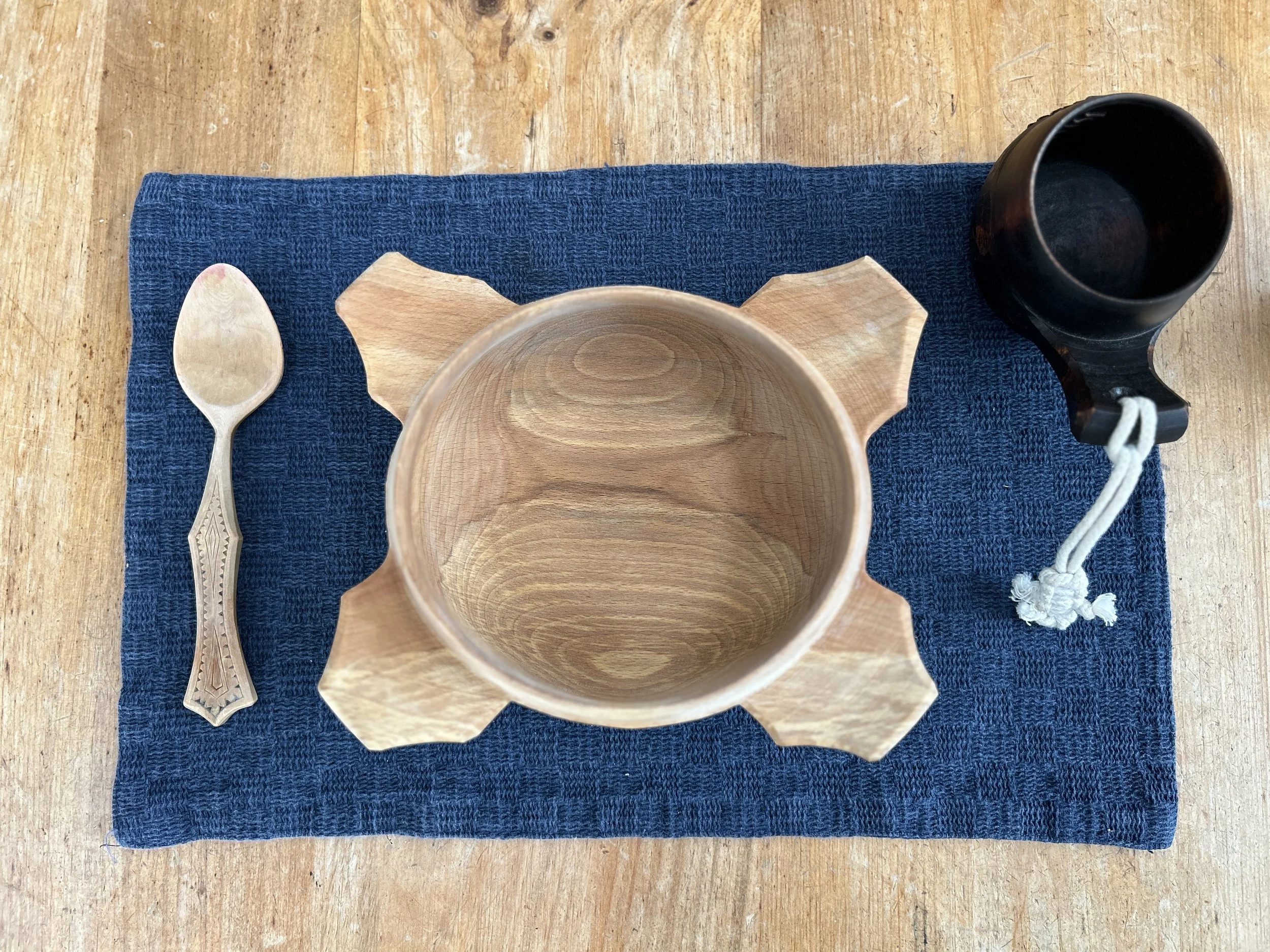
Eating from a bowl and spoon you made yourself is deeply grounding. It slows you down, sharpens your attention, and turns an everyday act into a simple ritual.
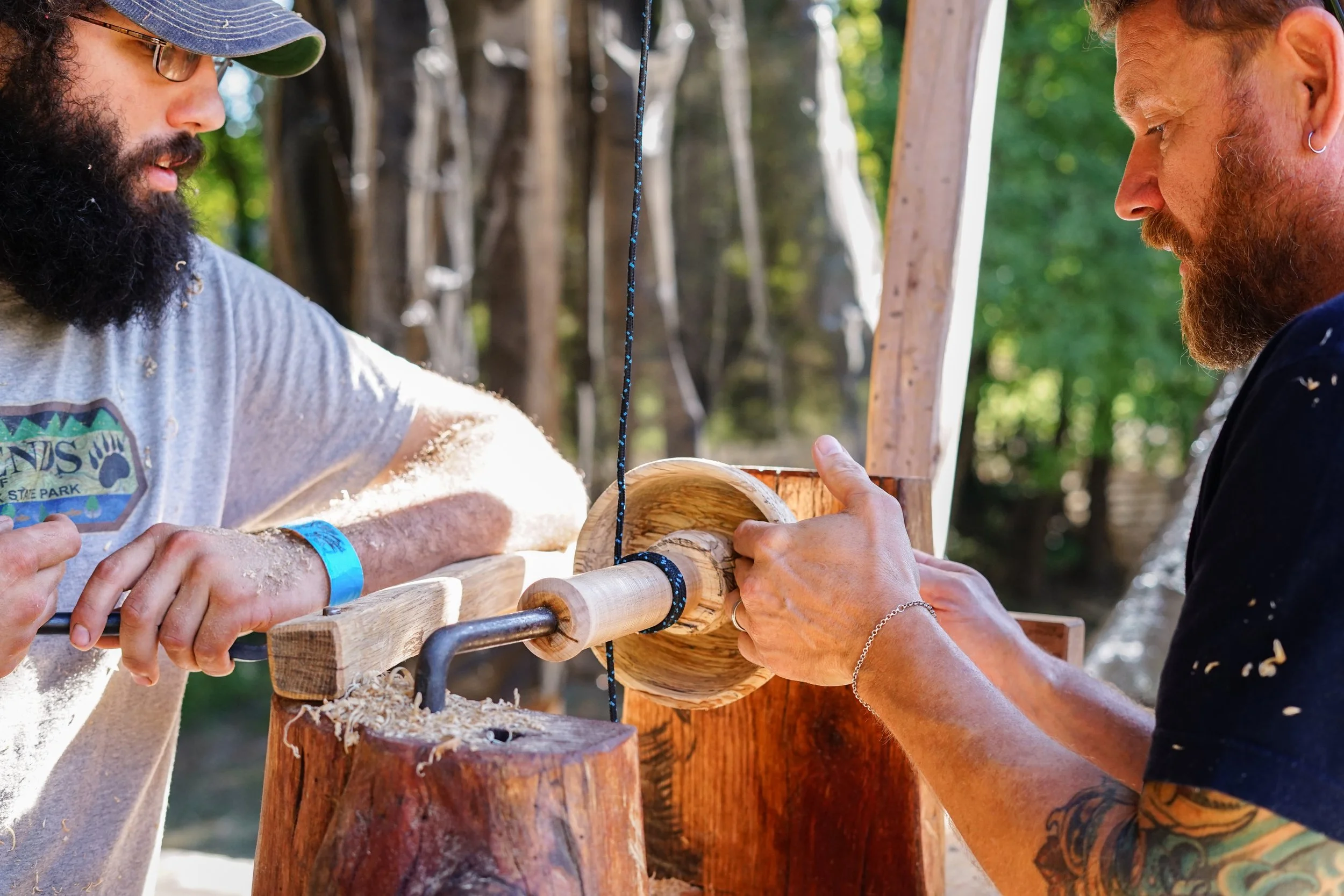
This week-long class is an immersion into two time-honored green woodworking traditions: turning bowls on a foot-powered pole lathe and carving wooden spoons. We’ll begin with bowl turning, working from freshly felled wood and following it all the way to a finished vessel. You’ll learn to shape bowl blanks with an axe, tune and adjust a pole lathe, and mount your work using several traditional methods. As the shavings fall, we’ll explore hook tool design and turning techniques with both tip-up and tip-down hooks, and touch briefly on the forging of these essential tools and how their shapes guide the cut.
The latter part of the week turns toward spoon carving. Here, the work slows and sharpens. We’ll look closely at spoon design, wood choice, and grain direction, then build safe, efficient habits through axe work and a wide range of Scandinavian knife grips. Along the way, we’ll explore ways to finish and decorate your work—burnishing, oiling, chip carving, and kolrosing—techniques that reward patience and attention.
The final day is left open. With prepared bowl and spoon blanks at hand, you can return to a form that calls to you, deepen a skill, or bring a piece to completion.
All tools and materials are provided, though you’re welcome to bring your own—especially sloyd knives, hook knives, and axes—if you have them. Turning hooks and Morakniv 106, 120, and 164 knives will be available for purchase.
Turning and carving ask for strength, coordination, and steady focus, and offer satisfaction in return. You’ll leave with bowls and spoons shaped by your hands, practical skills rooted in tradition, and a deeper connection to wood, craft, and the simple pleasure of a quiet meal.